
Public Policy in Light of Recent Court of Cassation Decisions
Introduction
The recognition, enforcement, and annulment of foreign court and arbitral awards in Türkiye are processes in which public policy emerges as one of the most critical criteria for review, both in theory and in practice. The Court of Cassation decisions determine the direction of case law regarding the scope and application of the concept of public policy. This article is a continuation of our previously published article titled “Public Policy as Grounds for Refusal of Recognition”[1] which examined the theoretical framework of the concept of public policy and the general principles shaped by the 2012 Grand Assembly of the Court of Cassation decision, providing explanations in light of the Court of Cassation decisions at the time. In this article, the reflections and developments in practice are conveyed through Court of Cassation decisions issued in recent years.
The Mere Contradiction Between a Foreign Arbitral Award and a Criminal Court Judgment Does Not, By Itself, Constitute a Ground for Refusal of Recognition
In its decision dated 8 November 2023, the General Assembly of the Court of Cassation (the “General Assembly”) reviewed the request for enforcement and recognition of foreign arbitral awards rendered the International Chamber of Commerce Arbitration Rules. The arbitral proceedings in question were conducted in two stages, and ultimately two arbitral awards were issued, dated 13 December 2012 and 19 June 2013, respectively. In the recognition proceedings separate allegations of violation of public policy were raised in relation to each arbitral award.
The first instance court held that the arbitral award dated 13 December 2012 conflicted with a final judgment rendered by the Turkish criminal courts; and in respect of the arbitral award dated 19 June 2013, it found that, although the valuation report underlying the award had been prepared by the claimant and its initial submission had been rejected, it was later submitted to the case file pursuant to the arbitral tribunal’s order and confidentiality decision, in a manner excluding commercial secrets; the identity of the report’s authors was kept confidential; and the report was evaluated without being disclosed to the respondent principal. Based on these grounds, the court concluded that the principles of equality of arms, the right to present evidence, and the publicity of proceedings had been violated, and accordingly rejected the enforcement requests regarding both arbitral awards on the basis of public policy.
The case was brought before the Court of Cassation, which held that there was no contradiction between the arbitral award dated 13 December 2012 and the criminal court judgment, considering the reasoning of the acquittal, as the criminal court had concluded that there was no sufficient, conclusive, and convincing evidence to support a conviction and that the elements of the alleged offence had not been established. As for the arbitral award dated 19 June 2013, the Court of Cassation found that the non-valuation-related parts of the report had been excluded and that no concrete evidence had been presented to prove that the principal respondent’s lack of access to the report constituted a procedural irregularity under the applicable arbitral rules; accordingly, it concluded that there had been no violation of public policy and reversed the first instance decision.
Following the reversal, the respondent filed a request for revision of the decision, and upon reviewing this request, the Court of Cassation found that the partial submission of the report in violation of the procedural rules agreed upon by the parties, the concealment of the identities of its authors, the lack of disclosure of the valuation models and methodologies applied, the absence of any opportunity for cross-examination of those individuals, and the fact that these limitations were not based on any legally valid or reasonable justification, amounted to a violation of the right to defence and thus constituted a breach of public policy. However, the Court of Cassation, also held that the first instance court had erred procedurally and legally by rendering a single judgment rather than separate rulings with respect to each arbitral award, and accordingly reversed the decision on grounds differing from its initial reasoning. Upon this second reversal based on different grounds, the first instance court resisted its previous judgment, and the this decision was appealed, bringing the matter before the General Assembly.
With regard to the arbitral award dated 19 June 2013, General Assembly noted that this award had been excluded from the scope of review and held that the claimant had no legitimate interest in appealing this part of the decision, thereby rejecting the appeal. As for the arbitral award dated 13 December 2012, the Court of Cassation ruled that the acquittal judgment rendered by the criminal court concerning the same factual circumstances did not constitute a ground to refuse the enforcement and the recognition of the arbitral award, since the criminal court merely stated that the acts in question did not constitute a criminal offence, but did not make a clear and definitive assessment as to whether those acts were unlawful. Moreover, the arbitral award was rendered on the basis of a breach of contractual obligations between the parties, which is distinct from criminal liability; therefore, there was no direct contradiction between the arbitral award and the criminal court’s decision. General Assembly concluded that the first instance court's decision rejecting the enforcement and recognition of the arbitral award dated 13 December 2012 was incorrect, and thus reversed the lower court’s ruling in respect of that award. It also found that the court’s failure to render separate rulings for each arbitral award constituted a procedural error[2].
An Arbitration Agreement Contained in an Expired Contract Does Not Apply to a De Facto Continuing Relationship
In its decision dated 29 November 2023, the General Assembly evaluated whether the arbitration agreement contained in the distribution agreement dated 1 January 2008 which had a term of two years, remained valid with respect to the de facto continuing relationship between the parties after the expiration of that term, in the absence of a renewed written contract.
The claimant initiated legal proceedings, arguing that although the commercial relationship had continued after the expiration of the contract, there was no valid arbitration agreement applicable to the ongoing dealings, as the relationship was not governed by a written contract. The respondent, on the other hand, invoked the arbitration agreement contained in the expired agreement dated 1 January 2008 and requested the dismissal of the case on jurisdictional grounds.
The first instance court accepted the arbitration objection, holding that although there was no written agreement in force between the parties as of 2008, the contractual relationship had been continued de facto, and the parties were deemed to have accepted the arbitration agreement within this framework; accordingly, it dismissed the case on the ground of lack of jurisdiction. The Regional Court of Appeal upheld this decision.
However, the Court of Cassation reversed the decision, holding that an arbitration agreement contained in an expired contract cannot be applied to a new relationship unless it is expressly reaffirmed by the parties in writing. In its reversal judgment, the Court of Cassation emphasized that the intention to arbitrate must be expressed clearly and unambiguously, that arbitration is of an exceptional nature, and therefore cannot be interpreted broadly.
Upon the lower court’s resistance, the case was referred to the General Assembly, which endorsed the Chamber’s opinion and held that the arbitration agreement contained in an expired contract could not be extended to a subsequent period, and that the validity of an arbitration agreement although independent from the main contract depends on an explicit and written expression of the parties’ intention to arbitrate.
Within this scope, the General Assembly concluded that an arbitration agreement contained in a written contract whose term has expired cannot be deemed valid for a subsequently continued de facto commercial relationship, unless the parties have expressly declared their intention to reaffirm the agreement[3].
Enforcement of a Foreign Bankruptcy Judgment Rendered Against a Non-Merchant Individual is Against Public Policy
In its decision dated 9 May 2023, the Court of Cassation assessed the public policy implications of a request for enforcement and recognition of a foreign court judgment concerning bankruptcy law. In the case at hand, enforcement and recognition in Türkiye was sought for a bankruptcy decision rendered by a Dutch court against the claimant. However, the first instance court rejected the request on the grounds that the claimant was not a merchant under Turkish law. Referring to Article 43 of the Enforcement and Bankruptcy Law (“EBL”), the court held that only persons who are merchants or are subject to bankruptcy under special laws may be declared bankrupt in Türkiye, and that this limitation pertains to public policy.
The Regional Court of Appeal also rejected the appeal on the merits, emphasizing that the foreign judgment was manifestly contrary to Turkish public policy due to the claimant’s non-merchant status.
The Court of Cassation upheld the lower court’s decision, finding the reasoning lawful and procedurally correct. Consequently, the Court concluded that, for the enforcement of foreign bankruptcy judgments, it is lawful to consider whether the individual qualifies as a merchant under Turkish law and to evaluate the limitation set forth in Article 43 of the EBL within the scope of public policy[4].
An Award Rendered in the Presence of a Duly Notified but Absent Arbitrator Does Not Constitute a Ground for Refusal of Recognition
In its decision dated 12 September 2023, the Court of Cassation examined whether the three-member arbitral tribunal had acted in accordance with procedural requirements when rendering its decision. In the case at hand, one of the three arbitrators appointed by the parties failed to attend the deliberations due to health and work-related reasons, despite having been duly notified of the meeting date; nevertheless, the remaining two arbitrators proceeded to issue the award. The first instance court held that the award rendered by two arbitrators was invalid pursuant to Article 295/2 of the Code of Civil Procedure (“CCP”). The court further noted, in line with Court of Cassation precedents, that a decision rendered by two arbitrators without the participation of the third in the deliberations of a three-member tribunal is deemed invalid. Accordingly, even though this procedural irregularity had not been raised by the parties, the court found that it had to be taken into consideration ex officio under the set aside grounds set out in Article 439 of the CCP, and concluded that the award was contrary to public policy pursuant to Article 439/2(g).
However, the Court of Cassation did not uphold this approach and stated in its judgment that, pursuant to Article 295(2) of the CCP, a decision rendered by the two arbitrators with concurring votes remains valid even if the third arbitrator who was duly invited to the deliberation, did not attend, and that such a circumstance does not constitute a violation of public policy. This judgment indicates that procedural irregularities arising during the arbitral proceedings should not automatically be regarded as breaches of public policy[5].
The Application of Compound Interest in an Arbitral Award Does Not Constitute a Violation of Public Policy
In its decision dated 16 June 2022, the Court of Cassation reviewed a request for recognition in Türkiye of a foreign arbitral award rendered in London. The respondent argued that there was no valid arbitration agreement between the parties, that the appointment of the arbitrator was procedurally flawed, and that the compound interest awarded by the arbitrator was contrary to public policy. The first instance court held that the arbitration agreement, which was formed through references made to the charter party, was valid under the New York Convention, and that the application of compound interest alone did not amount to a violation of public policy, thereby granting recognition.
The Regional Court of Appeal upheld the decision, and the Court of Cassation, upon appeal, found the lower court judgments to be in accordance with the law. The judgment provides a detailed assessment of the validity of arbitration agreements incorporated by reference, the exceptions applicable to procedural defects in the arbitrator appointment process, and the limits of public policy objections to compound interest. It affirms that references to the main contract may suffice to establish arbitration intent and that the principle of revision au fond should be preserved in the context of compound interest evaluations[6].
Whether a Penalty Clause Is Excessive Cannot Be Reviewed Under Public Policy Grounds
In its decision dated 20 June 2022, the Court of Cassation reviewed a request to set aside of an arbitral award rendered by the Istanbul Arbitration Centre. The dispute concerned a contractual penalty stipulated in a settlement protocol executed between the parties, arising from a breach of the non-solicitation obligation. The claimants sought annulment of the award on the grounds that the penalty clause was excessive, no expert examination had been conducted, witness statements had not been considered, and the non-solicitation obligation violated competition law, thereby constituting a breach of public policy.
However, the Court of Cassation upheld the decision of the Regional Court of Appeal, which had found that the arbitration agreement had been validly concluded between the parties, the arbitrator had acted within the scope of the agreement and had not exceeded their authority, the proceedings were conducted in accordance with the expedited arbitration rules of the Istanbul Arbitration Centre as agreed by the parties, and that the principles of party equality and the right to be heard had been respected. The appellate court had further held that the absence of an expert report fell within the discretion of the arbitrator and that the non-solicitation obligation based on a non-compete clause did not violate public policy.
The Court emphasized, in particular, that whether a contractual penalty is excessive cannot be examined under the lens of public policy, as such an assessment would amount to a review of the merits. It was also stated that the non-solicitation obligation was limited in duration, constituted a matter of private law, and did not infringe upon the freedom to work. Finally, the Court concluded that the exclusive jurisdiction of the Competition Authority does not preclude arbitration in private law disputes. In doing so, the Court reaffirmed the limits of public policy objections in relation to penalty clauses and reiterated the principle that the merits of arbitral awards may not be reviewed by the courts[7].
Law No. 805 Does Not Constitute a Ground for Refusal of Enforcement in Contracts Concluded Between Foreign Parties
In its decision dated 12 December 2023, the 6th Civil Chamber of the Court of Cassation reviewed objections raised against the recognition of an arbitral award. The respondent argued that the contract, being drafted in a foreign language, violated Law No. 805; that the mandatory pre-arbitration conciliation procedure had not been conducted; that the facility subject to the contract posed risks to public health; and that the right to a fair trial and the right of defence had been infringed. On these grounds, the respondent asserted that the arbitral award was contrary to public policy, both procedurally (violation of fair trial guarantees, limitation of the right to defence, failure to comply with pre-arbitration conciliation obligations) and substantively (existence of a facility allegedly posing risks to public and occupational health and safety).
The first instance court granted recognition, holding that the contract had been concluded between foreign companies and did not constitute a breach of public policy. The court further noted that the allegations regarding public health risks fell within the scope of a review of the merits, and such matters could not serve as grounds for refusal of enforcement.
The Regional Court of Appeal upheld the decision, emphasizing that Law No. 805 is only applicable where both parties to the contract are Turkish nationals, and therefore the use of a foreign language in the contract and proceedings did not breach public policy. The court also found that the parties had the opportunity to present their claims and defences, including counterclaims, during the arbitration proceedings, and that the principles of equality of arms and the right to a fair trial had not been violated.
The Court of Cassation affirmed the decision, finding the lower courts’ reasoning accurate and lawful. It held that the right of defence had not been restricted, no public policy violation had occurred, and the arbitral award had been rendered in accordance with both procedure and law. The Court of Cassation particularly underlined that the submission of evidence, the opportunity to file counterclaims, and the exercise of procedural rights within the arbitration process precluded allegations of unfair trial. It concluded that objections concerning public health and environmental safety were related to the merits of the arbitral award and thus could not be evaluated under the scope of public policy violation[8].
Conflicting Arbitral Awards Rendered in Relation to the Same Dispute Constitute a Violation of Public Policy
In its decision dated 15 June 2022, the Court of Cassation reviewed a request for annulment of arbitral awards rendered under the Rules of the Istanbul Chamber of Commerce Arbitration Centre. The parties were involved in two separate arbitration proceedings arising from the same contract but in different capacities: in Case No. 2019/7, the claimant was the party transferring the portfolio, while in Case No. 2019/9, the claimant was the transferee company. Each case was adjudicated by a different sole arbitrator, and conflicting assessments were made as to whether the contractual obligations of the same company had been duly performed. The Regional Court of Appeal rejected the annulment requests on the grounds that there was no complete identity of parties and claims in the two arbitral proceedings, that the arbitrators had discretion in evaluating the evidence, and that the divergence between the awards did not constitute ground for annulment.
However, the Court of Cassation held that, although courts are precluded from reviewing the merits of arbitral awards, conflicting decisions based on the same factual circumstances may result in contradictory outcomes, which undermine the principles of legal certainty, transparency, and consistency, thereby constituting a violation of public policy. According to the Court, while the award in Case No. 2019/7 found that the claimant had failed to fully perform its obligations, the award in Case No. 2019/9 concluded that the same party was not entitled to restitution of the contract price because it had fulfilled its obligations. Due to this inconsistency, the Court found that the lower courts should have inquired into whether the award in Case No. 2019/7 had become final and should have assessed the potential res judicata effect. Rendering a judgment without conducting such an inquiry was found to be procedurally improper and contrary to public policy.
As a result, the Court of Cassation reversed the decision finding that the contradiction between the arbitral awards concerning the same set of facts constituted a breach of public policy[9].
Conclusion
In recent years, the Court of Cassation has adopted a narrow interpretation of the concept of public policy and has refrained from engaging in a review on the merits in annulment and recognition proceedings brought against arbitral awards. The overall approach of Court of Cassation is aligned with an arbitration-friendly stance. This reflects a positive judicial attitude towards the development of arbitration in Türkiye.

- Kamiloğlu, Mehveş Erdem. 2021. "Public Policy as Grounds for Refusal of Recognition." Erdem & Erdem. Access Date: June 1, 2025 (https://www.erdem-erdem.av.tr/en/insights/public-policy-as-grounds-for-refusal-of-recognition).
- General Assembly of the Court of Cassation dated 08.11.2023, Case No: 2022/660, Decision No: 2023/1066.
- General Assembly of the Court of Cassation dated 29.11.2023, Case No: 2023/11-103, Decision No: 2023/1185.
- Court of Cassation 6th Civil Chamber dated 09.05.2023, Case No: 2023/1965, Decision No: 2023/1732.
- Court of Cassation 6th Civil Chamber dated 12.12.2023, Case No: 2023/2416, Decision No: 2023/2676.
- Court of Cassation, 11th Civil Chamber dated 16.06.2022, Case No: 2020/7985, Decision No: 2022/4932.
- Court of Cassation 11th Civil Chamber dated 20.06.2022, Case No: 2021/3492, Decision No: 2022/5025.
- Court of Cassation 6th Civil Chamber dated 12.12.2023, Case No: 2023/3007, Decision No: 2023/4212.
- Court of Cassation 11th Civil Chamber dated 15.06.2022, Case No: 2022/2105, Decision No: 2022/4906.
All rights of this article are reserved. This article may not be used, reproduced, copied, published, distributed, or otherwise disseminated without quotation or Erdem & Erdem Law Firm's written consent. Any content created without citing the resource or Erdem & Erdem Law Firm’s written consent is regularly tracked, and legal action will be taken in case of violation.
Other Contents

In its decision dated 29 April 2025 and numbered E. 2024/1700, K. 2025/1758 (the Decision), the 6th Civil Chamber of the Turkish Court of Cassation (the Court of Cassation) made significant findings concerning the setting aside of an arbitral award rendered…

Arbitration is a system that enables parties, within the framework of freedom of contract, to partially depart from state court proceedings and resolve their disputes through a private adjudicatory mechanism. Under Turkish law, the legal remedy available against arbitral…

On 29 January 2026, the International Chamber of Commerce’s (“ICC”) has published a report on expedited procedure provisions (“Report”). The Report is prepared by a Task Force established within the ICC’s Commission on Arbitration and ADR. The Report compiles…

Emergency arbitration addresses the need for interim protection before the arbitral tribunal is constituted in institutional arbitrations. Arbitral institutions establish short timeframes to ensure parties can obtain interim relief quickly. For example, the International Chamber of Commerce (“ICC”) requires that the emergency...

International arbitration remains the preferred mechanism for resolving complex cross-border disputes. Yet despite its advantages—neutrality, enforceability, flexibility—arbitration is frequently criticized for being too slow, too expensive, and too procedurally heavy. Often, parties proceed through hearings and...

For arbitral awards rendered in international commercial arbitration to produce legal effects in foreign jurisdictions, they must be subjected to proceedings for “recognition” and “enforcement.” This process is governed by the New York Convention as well as by the provisions of the Law on Private International Law...

Arbitrability, the determination of whether a specific subject matter can be resolved through arbitration, constitutes a fundamental aspect of arbitration within the scope of international commercial dispute resolution. This concept draws a delicate balance between party autonomy—a fundamental principle of arbitration...

As is well known, the action for annulment of objection is a special type of lawsuit regulated under Article 67 of the Turkish Execution and Bankruptcy Law No. 2004 (“EBL”). The primary objective of this action is to nullify a debtor’s objection to execution proceedings. Despite its procedural function of facilitating...

On 16 December 2024, the London Court of International Arbitration (“LCIA”) released its third batch of challenge decisions covering the period from 22 July 2017 to 31 December 2022. The LCIA has also issued a detailed commentary that identifies key legal themes and analytical trends, offering practitioners...

The International Chamber of Commerce (“ICC”) has published its report on the dispute resolution statistics for 2023 (“Report”) , shedding light on the evolving landscape of international arbitration...

Syndicated loans undoubtedly hold a significant position among global financing models. In 2023 alone, 3,655 syndicated loans were provided to companies in the US, with their total value reaching USD 2.4 trillion...

Preliminary attachment refers to the temporary seizure of a debtor's assets to secure a creditor's claim. While it serves as a vital instrument for safeguarding the rights of creditors, it is subject to specific and stringent conditions under Turkish law to prevent any potential misuse...

One of the most important reasons for parties to choose arbitration is the opportunity to freely choose their arbitrators. This freedom granted to the parties also distinguishes arbitration from proceedings before state courts, where the parties are deprived of the power to determine the judges who will conduct the...

The 6th Civil Chamber of the Court of Cassation ruled on October 12, 2022, that national courts have jurisdiction over objections to provisional measures in international arbitration disputes...

The declaration of intent to resolve disputes through arbitration is the fundamental constituent element of an arbitration agreement. To speak of a valid arbitration agreement, the parties' intention to arbitrate must emerge in a way that leaves no room for dispute...

In the wake of the evolving dynamics of commercial transactions, the Netherlands Arbitration Institute Foundation (NAI) announced new arbitration rules . 2024 NAI Arbitration Rules are in force as of 1 March 2024 and will be applicable on proceedings filed on or after this date...

With the global shift to online activities, domain names play a crucial role in identifying businesses. It is more common than ever for a domain name to be registered that is confusingly similar to a trademark or service mark...
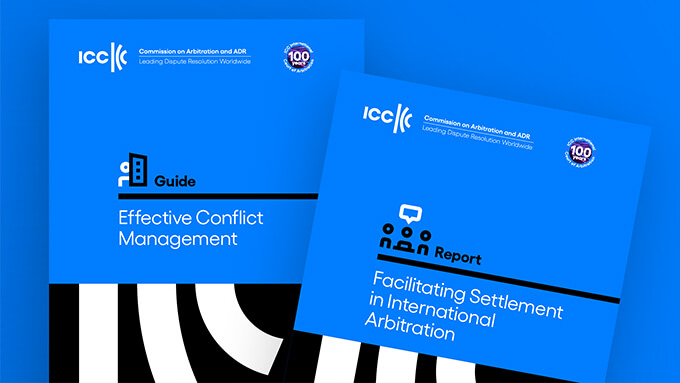
The ICC Commission on Arbitration and ADR (“Commission”) published a new guide and report with the aim to increase awareness on alternative dispute resolution (“ADR”) mechanisms to prevent disputes and strengthen the relationship between all stakeholders.The Guide on Effective Conflict Management...

Mergers and Acquisitions (“M&A”) are restructuring of companies or assets through various types of financial transactions, such as mergers, acquisitions, purchase of assets, or management acquisitions. This Newsletter article covers M&A disputes being solved before arbitral tribunals.

In the context of arbitration practice, the principle of revision au fond means that the courts can not examine the merits of a dispute when reviewing an arbitral award. This principle is most commonly encountered in set aside and enforcement proceedings. An arbitral award is evidence of the parties’ willingness...

Under Turkish law, parties may agree on the settlement of disputes that have arisen or may arise, regarding the rights that they can freely dispose of, by arbitration. However, disputes which are not subject to the will of parties, such as the disputes relating to in rem rights of immovables, bankruptcy law...

On 4 September 2020, a research project “Does a Right to a Physical Hearing Exist in International Arbitration?” was launched by an International Council for Commercial Arbitration (“ICCA”) taskforce. Due to the Covid-19 pandemic, many arbitration hearings were held online. Many institutional rules...

Dubai International Arbitration Center amended its Arbitration Rules on 25 February 2022. The 2022 Arbitration Rules were published on 2 March 2022 and came into effect on 21 March 2022. The Rules will be applied to arbitrations that are filed after 21 March 2022; unless parties agree otherwise...

In the aftermath of the Achmea decision, controversies on intra-EU arbitrations continue. Most recently, the Paris Court of Appeal has annulled two arbitral awards rendered against Poland. Meanwhile, the Higher Regional Court of Berlin has refused to declare that an Irish investor’s ICSID claim...


Under Turkish law, the legal remedy that can be applied against arbitral awards is an annulment action. Law on International Arbitration No. 4686 (“IAL”) finds its application area in arbitration proceedings where Turkey is the place of arbitration...

It is well known that following a decision of the Court of Justice of the European Union, problems arose related to arbitration of intra-EU disputes, and particularly arbitration under the Energy Charter Treaty...

Arbitration in corporate law contains controversial elements in many respects, especially the issue of arbitrability. Even in legal systems where these disputes are considered to be arbitrable, uncertainties remain on whether an arbitration clause can be included in the articles of...

Arbitration has benifited from a great increase in the use of technology which has directly effected the conduct of proceedings. More particularly, with digitalization, the way that we conduct arbitration proceedings has been changed to reflect the current needs of parties, with an aim of increasing time...